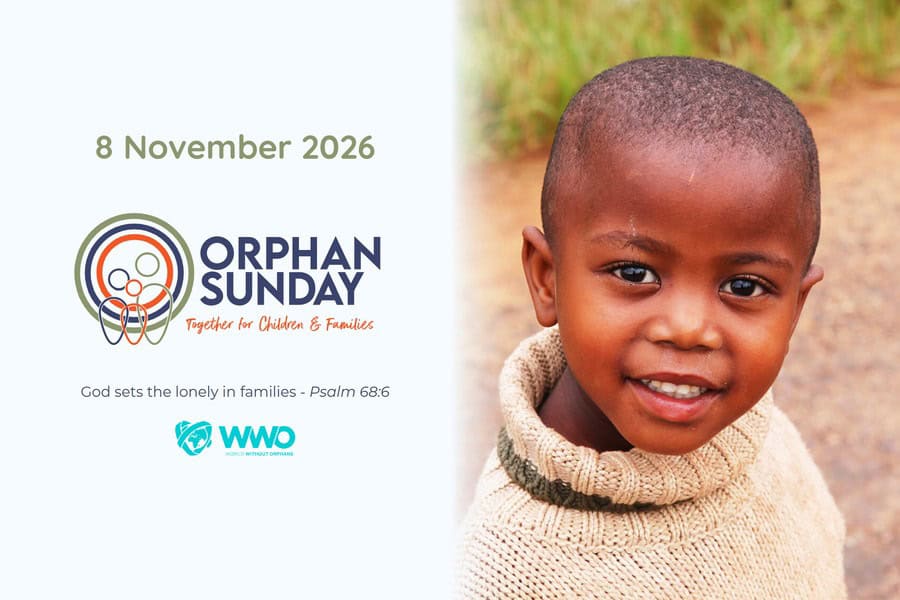
Churches around the world are invited to mark Orphan Sunday on 8 November, or on another Sunday that fits their local calendar, by praying for vulnerable children and helping them grow up in safe, loving families.
Welt ohne Waisen (WWO) is encouraging congregations to strengthen families, support caregivers and work together to protect children. This year’s theme is “Pray and Care. Together for Children and Families.”
“Everyone can do something,” WWO says. Its Orphan Sunday toolkit offers prayer guides, videos, devotionals, social media materials and practical ideas to help churches prepare.
“When we look at the number of children who lack adequate parental care, the challenge can feel overwhelming,” said Rebecca Goropevsek, Co-Coordinator of the World Evangelical Alliance (WEA) Children’s Network. “But churches have a significant role to play. They are present in almost every community, they know the families around them, and they are trusted. Few are better positioned to notice a family under strain, walk alongside caregivers and offer support that lasts.”
“Through Orphan Sunday, churches can start with small, practical steps — raising awareness, supporting families, encouraging caregivers and inspiring others to get involved,” she said. “When churches recognize their influence and act together, even small beginnings can bring lasting change for children and families.”
From one church in Zambia to a global movement
Orphan Sunday began in 2002 in Kalingalinga, a community in Lusaka, Zambia. Pastor Billiance Chondwe drew on James 1:27, which describes looking after orphans and widows in their distress as religion that is “pure and faultless” (NIV). He called his congregation to care for the orphans and widows around them.
Although many members were poor themselves, they brought food, clothing and shoes for children in need. Their generosity made a lasting impression on Gary Schneider, an American visitor who went on to help coordinate Orphan Sunday across Zambia and share the vision with churches in the United States.
The observance reached the United States in 2003 with support from Every Orphan’s Hope and other organizations. In 2009, the Christian Alliance for Orphans began coordinating it. Today it is observed in more than 100 countries, according to its organizers.
Unity in Ukraine
In Ukraine, Orphan Sunday helped mobilize thousands of churches on behalf of children.
During a recent webinar hosted by the WEA Children’s Network, Andrii Fedun, WWO’s events and communications lead in Ukraine, recalled how Ukraine Without Orphans invited churches to a day of prayer for children and families about 15 years ago.
More than 6,000 churches across denominations took part in the first year, and more than 18,000 the next.
Yet for Fedun, the numbers were not the most important outcome.
“The real story wasn’t the number. It was unity,” he said.
Churches prayed together, supported foster and adoptive families, visited children and helped families in crisis. Along the way, congregations came to see caring for children at risk not as the task of a few specialized organizations but as a calling for the whole Church.
Orphan Sunday can help churches make that shift, Fedun said: “It can move us from awareness to prayer, from prayer to action, and from action to collaboration.”
A growing response across the Middle East and North Africa
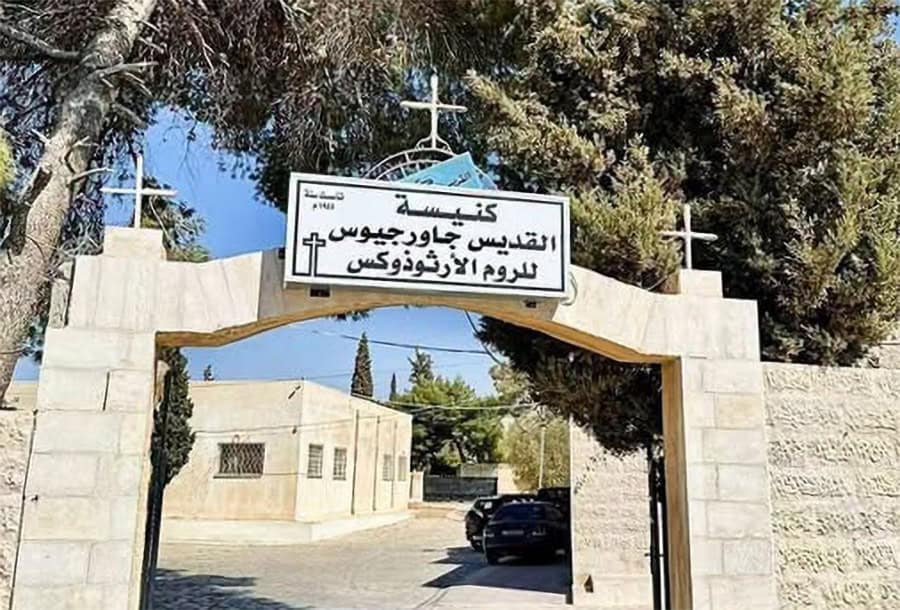
A similar story unfolded in Jordan. In February 2016, Nisreen Hawatmeh, now WWO’s regional ambassador for the Middle East and North Africa, attended the first WWO Global Forum and encountered the vision behind Orphan Sunday.
Back home, she reached out to others who shared her concern, and together they began praying and planning.
“In 2017, we observed the first Orphan Sunday in Jordan with just four churches,” Hawatmeh recalled.
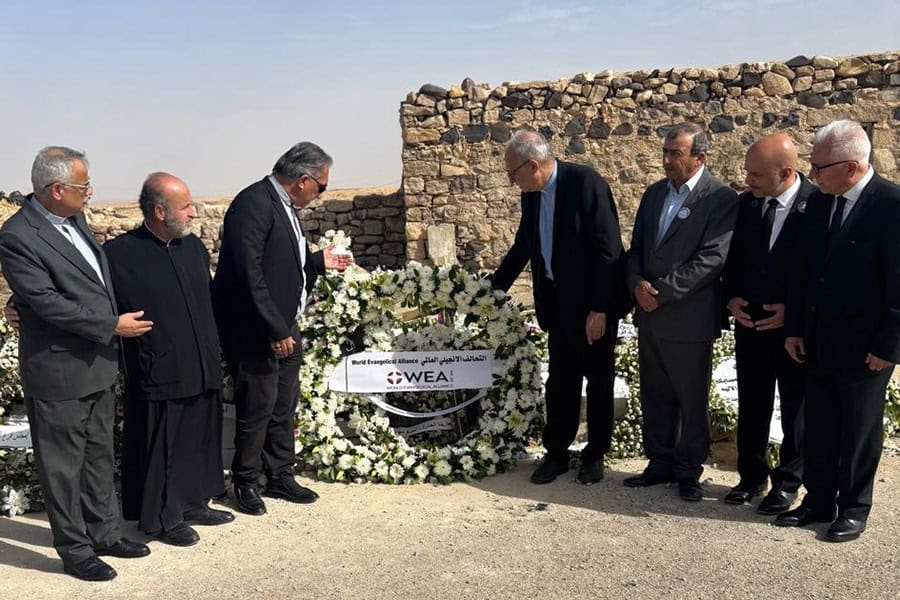
From Jordan, the movement spread to Syria and Egypt, then Iraq, Sudan, Uganda, Kuwait, the United Arab Emirates and the West Bank. Lebanon joined in 2025.
Churches in the region distribute Orphan Sunday posters and use the day to pray for children and encourage practical responses to their needs.
Hawatmeh hopes the vision will reach every part of the Arab world, inspiring more churches to ask how they can ensure that every child experiences “love, protection, belonging and hope.”
What churches can do
WWO’s vision is for every child to grow up in a safe, loving family and community, know their heavenly Father and reach their God-given potential.
That goes beyond meeting immediate needs. Churches can help keep families together by supporting parents and caregivers, encouraging foster and adoptive families, and helping prevent unnecessary separation.
When children cannot safely remain with their birth families, churches can support appropriate family-based care and those who provide it.
On Orphan Sunday, a church might hold a prayer service, help a family in crisis, support foster or adoptive parents, or partner with organizations that serve children.
As Fedun noted, one Sunday may seem small. Yet in Ukraine, it brought thousands of churches together.
Whether on 8 November or another Sunday that suits their calendar, churches can use Orphan Sunday as a first step in caring for the children and families in their own communities.