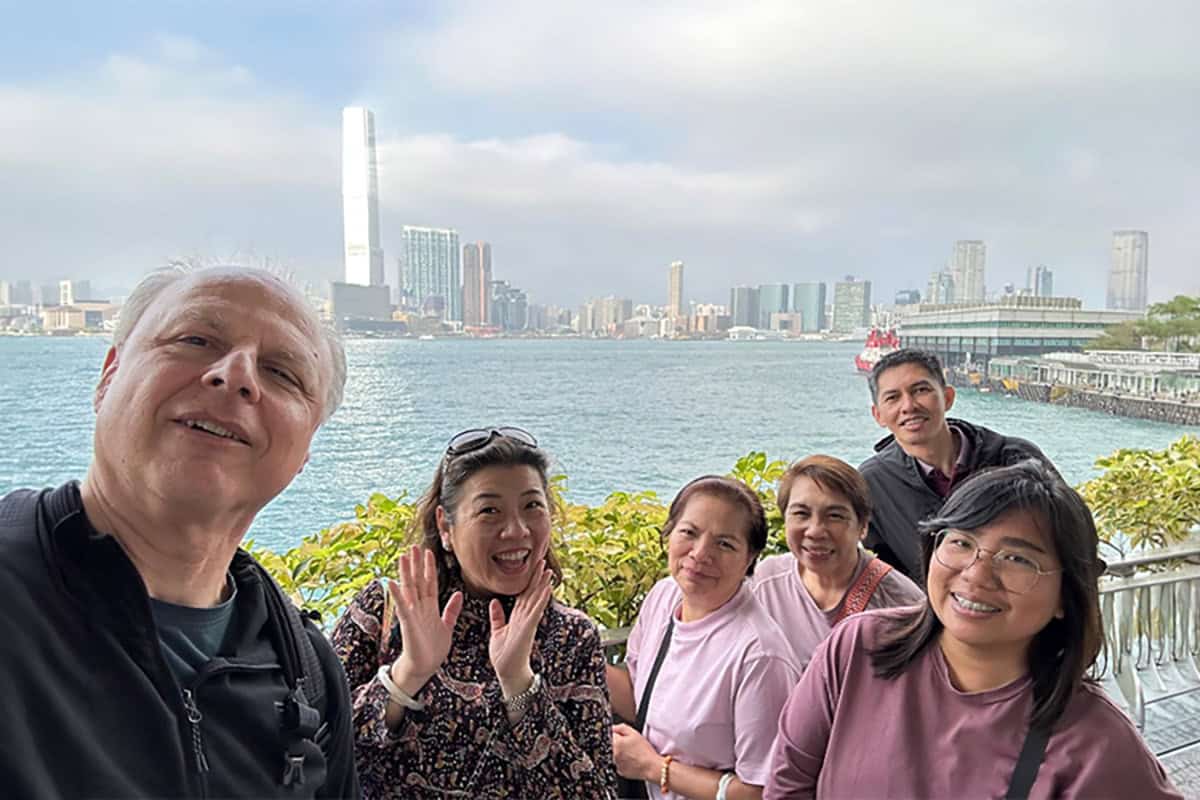
By Mark McLeod
The global Christian community faces an important challenge that has received far less attention than it deserves: how it understands, welcomes, and includes single people.
Marriage and family have traditionally occupied a central place in church teaching and ministry. But the growing number of people who are unmarried, divorced, widowed, or separated calls for a broader understanding of Christian identity, discipleship, leadership, and belonging.
This is not simply a matter of changing church programs or creating a ministry for people who happen to be single. It is about challenging deeply rooted cultural and religious assumptions that have often left single Christians feeling overlooked or undervalued, or even regarded as incomplete.
The demographic reality is difficult to ignore. According to global figures cited from the United Nations Department of Economic and Social Affairs, solo-living arrangements have grown substantially over the past century, rising from less than 10% in 1900 to an estimated 28% to 35% today. In some high-income countries, the proportion reaches 40%.
Although the figures vary considerably across regions and economic circumstances, the direction is clear: singleness is an increasingly significant feature of contemporary society. Yet the evangelical Church has not always kept pace with this reality.
How the WEA Singles Initiative began
In 2017, I began a dialogue with the leadership of the World Evangelical Alliance (WEA) about the rapidly growing global population of single people, particularly within the evangelical community. That conversation eventually developed into the WEA Singles Initiative. It gained further momentum in October 2022, when I was invited to serve as the WEA Singles Advocate within WEA’s Decade of Disciple-Making (2020–2030).
The initiative rests on a straightforward but important conviction: every human being is a unique and eternal image-bearer of God, regardless of marital status.
For practical purposes, we distinguish between two broad groups: those who are single and have never married, and those who are single again following separation, divorce, or widowhood. These categories encompass people with very different experiences, cultural backgrounds, spiritual journeys, and personal circumstances.
We recognize that singleness cannot be understood through a single cultural or theological lens. Nevertheless, the Church must begin by acknowledging this diverse population and ensuring that its members are neither invisible nor marginalized.
Singlism in society and in the Church
A major ongoing challenge is what researchers describe as singlism — the stereotyping, prejudice, and discrimination directed toward people who are not partnered or married.
Across many societies, marriage is still treated as the expected measure of maturity, stability, success, and happiness. Singleness, by contrast, is often regarded as a temporary waiting room before marriage or, worse, evidence that something has gone wrong in a person’s life. Unmarried women, in particular, can face deeply entrenched cultural stereotypes and derogatory labels.
These assumptions are not confined to secular society. They also appear within churches, where marriage and family ministries often receive considerable attention, while the spiritual, social, and leadership contributions of single people remain largely overlooked.
There are also practical consequences. Single people may face higher per-person costs for housing, health care, and other necessities, while economic and workplace structures often favor married couples and families.
Within church life, the consequences can be equally significant. Single Christians may find themselves excluded from leadership opportunities or treated as less suitable for certain responsibilities simply because they are unmarried.
In conversations with evangelical leaders around the world, I have encountered encouraging openness and an immediate recognition of this issue’s importance. At the same time, I have had frank discussions with church and alliance leaders who have shown little interest in engaging with the single population, sometimes expressing considerable cynicism.
Behind some of these attitudes lies an uncomfortable implication: there must be something wrong with an older unmarried Christian, and certainly with someone whose marriage has ended in divorce or separation. Such thinking is inconsistent with the principle that every person has equal dignity as an image-bearer of God.
Awareness, acceptance, and advocacy
The WEA Singles Initiative seeks to challenge these attitudes through three interconnected priorities: awareness, acceptance, and advocacy. We want to move beyond simply acknowledging single people’s existence to fully valuing, engaging, and empowering them within the global evangelical community.
This work is already taking shape. The Singles Influencers Network brings together Christian thought leaders and advocates from countries including Australia, Great Britain, Canada, Costa Rica, France, India, Israel, Malaysia, Nepal, the Philippines, the United States, and Zimbabwe. Through this growing network, we are building relationships, exchanging resources, and encouraging a more informed global conversation about singleness.
Advocacy teams have also been engaging with regional and national evangelical alliances, including those in Sri Lanka, Nepal, Malaysia, India, and the Philippines. Their work focuses on raising awareness, encouraging acceptance, and developing resources that reflect the experiences and needs of single Christians.
Since October 2023, the initiative has also maintained a regular presence on WEA social media to broaden the conversation and encourage engagement across the global evangelical family.
An important part of this effort is ensuring that single men are not overlooked. For too long, some Christian men’s ministries have focused almost exclusively on married men and family life. Conversations with organizations such as Promise Keepers of the Philippine Council of Evangelical Churches (PCEC) and Impactus (formerly Promise Keepers Canada) have helped encourage a stronger emphasis on single men.
In 2024, Promise Keepers PCEC included a significant focus on single men at its national gathering in Manila — an encouraging example of the kind of change that is possible.
The initiative also recognizes the importance of engaging with emerging questions about artificial intelligence, transhumanism, and the rapidly changing nature of human relationships and identity. These developments present not only extraordinary opportunities but also profound ethical challenges. The evangelical community’s response to these changes must include the experiences, dignity, and role of single people.
Affirming both marriage and singleness
Ultimately, this is not a campaign against marriage or family. We fully affirm the biblical significance of marriage and the family. But these commitments should never diminish the value or contribution of those who are single.
The challenge is to embrace both realities: the sacred Adamic bonds of marriage and family, and the equally important dignity and calling of individuals who are not married.
A generational commitment
Changing attitudes will not happen overnight. Moving toward a church culture that fully values, engages, and empowers single and single-again Christians will require a generational commitment, mutual goodwill, and discipleship that works in both directions. Singles and married people must learn from and support one another.
The next generation of evangelical leaders will have a particularly important role in advancing this change. They have an opportunity to build churches in which marital status is no longer the only measure of spiritual maturity, personal worth, or leadership potential.
The WEA Singles Initiative is therefore both an immediate grassroots effort and a long-term vision, extending to the WEA General Assembly in 2030 and beyond, toward 2050. We hope it will become a global model that churches, evangelical alliances, and other Christian organizations can adapt to their own cultural and regional contexts.
The question facing the Church is no longer whether singleness deserves attention. Demographic reality, spiritual leadership needs, and the biblical principle of human dignity make that clear. The real question is whether the global evangelical community is ready to recognize single people not as a neglected constituency but as an integral part of the Body of Christ — with gifts to offer, leadership to exercise, and an equally important place in the life and mission of the Church.
About Mark McLeod
Mark McLeod is the WEA Singles Advocate and leads the WEA Singles Initiative. As a retired first responder, Mark has worked in many natural and human caused international disasters. He has acted as Youth Ambassador for the WEA Youth Commission, helped initiate the WEA Department of Relief and Development and assembled a Spiritual Care team for the 2019 WEA General Assembly in Indonesia.
As WEA Singles Advocate Mark has led WEA Singles Advocacy teams to Sri Lanka, Nepal, Malaysia, Borneo / East Malaysia and the Philippines (2023/24).
Mark has two grown children, several grandchildren and lives in Calgary, Canada.