The Secretary General of the World Evangelical Alliance (WEA), Rev. Botrus Mansour, cautiously welcomed the Spanish Government’s decision to redress the injustice suffered by evangelical pastors and their families. Mansour called for further engagement between evangelical representatives and the government of Spain to ensure a just and fair solution for those who were prevented from making social security contributions during the Franco regime.
The Council of Ministers of the Spanish government approved, on September 22nd, the Royal Decree that sets out the procedure for recognizing the work undertaken by evangelical pastors prior to their inclusion in the General Scheme in 1999 as Social Security contributions.
Rev Mansour said he is pleased that pastors who do the work of God and serve His kingdom are finally entitled to a respectful, dignified retirement. “We join our beloved brothers and sisters in Spain in this important achievement and call on the Spanish government to sit down with representatives of the Federation of Evangelical Religious Entities in Spain (FEREDE) to work out some of the remaining points of difference.”
Mrs. Carolina Bueno Calvo, Executive Secretary of FEREDA, said that Spanish evangelicals have been calling for redress of this painful case for many years. “In our view, this requires not only the recognition of the injustice committed by the Spanish State against Protestant pastors and their families for decades, but also the corresponding moral reparation through an act of vindication that allows this dark chapter of the history of Spanish Protestantism—which is also the history of Spain—to be closed with dignity.”
“Upon analyzing the text, we have found that despite the progress represented by the recognition of the years that evangelical pastors were unable to contribute due to legal impediments by the State, the requirements for affected pastors and widows to qualify for the measure and benefit from it are far from sufficiently satisfactory, since they are required to pay the capital cost contributions for the years they were not allowed to contribute. In our view, this requirement is unfair.”
Ms. Calvo insists that the improvement entails the adoption of complementary measures that exempt beneficiary pastors and widows from paying the capital cost, with the State itself assuming this financial burden, in the same way that it has been done in analogous situations with other social groups.
As a result, Spanish evangelicals requested an urgent meeting with government officials in order to seek a solution that improves the conditions of this Royal Decree before it enters into force.
Manuel Suárez, Deputy Secretary General for the International Area of the Spanish Evangelical Alliance, welcomed the news, calling it “rare good news in public life,” and saying that “this is a cause for joy for everyone.”
Dr Janet Epp Buckingham, director of global advocacy for the World Evangelical Alliance, said the entire advocacy team in Geneva is pleased to have played a small part in seeing justice for these pastors. “We commend the national alliance for persevering. Advocacy is a prophetic ministry that sometimes takes years to see positive results, and we support their position requiring the need for the state, not the pastors or their families, to bear the capital cost contributions for the years they were not allowed to do so.”
In 2025, the Interfaith Dialogue Committee and the World Evangelical Alliance backed the issue and brought it before the UN. This followed years of efforts by the Spanish Evangelical Alliance through the permanent delegation that the global evangelical organization has at the UN Human Rights Council in Geneva.
On 22 May, at a ceremony marking the 70th anniversary of the Commission for Evangelical Defense in Madrid’s national Parliament, the Under-Secretary to the Presidency, Alberto Herrera, announced that the text would be sent to the Council of State as the “final step prior to” its approval, and acknowledged Spain’s “historical debt” to those pastors.
According to a statement from the Ministry of Inclusion, Social Security and Migration, evangelical and Adventist worship ministers who served in Spain before those dates “will be able to have that period recognized as a period of contributions for the purposes of accessing retirement, permanent disability or death and survivor’s pensions”.
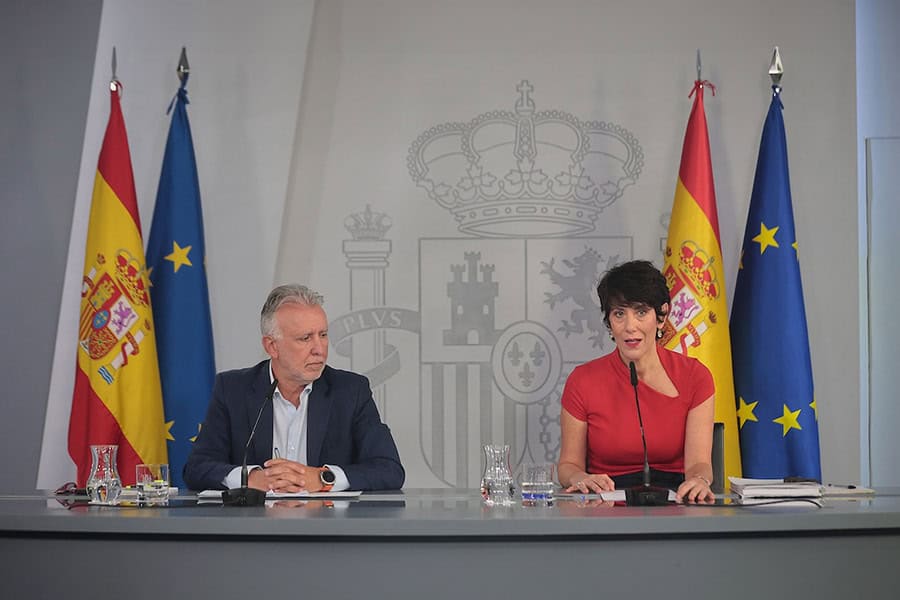
Social Security Minister Elma Saiz stated that this is “a measure that does justice to a group of people who were persecuted during the dictatorship, who carried out their work at a time when they lacked the protective umbrella of the Social Security system, and who will finally see an improvement in their protection.”
Bueno pointed out that over 1,200 pastors carried out their Christian ministry during the Franco regime and the years that followed (known as the Democratic Transition) without being able to make social security contributions.
Nearly 700, more than half, have already died without having their rights recognized, leaving their widows in a helpless situation. “We will be able to speak of true redress once we know the specific scope of the legislation and can verify that it complies with court rulings and the legitimate expectations of our retired ministers”, added Carolina Bueno, who leads the Protestant body in charge of negotiating with the State.
In November 2021, FEREDE raised the issue with Félix Bolaños, the minister of the Presidency, who expressed a willingness to work on it. Since then, the evangelical entity has been in contact with parliamentary groups, the Hate Crimes Prosecution Service, and the Directorate General for Religious Freedom.
In November 2017, the Supreme Court partially annulled Royal Decree 839/2015, which had been appealed by evangelicals in Spain on the grounds that it discriminated against the Catholic clergy.
The European Court of Human Rights ruled on 3 April 2012, against Spain in the case of pastor Francisco Manzanas Martín. He was denied a pension because his years of ministry prior to 1999 were not taken into account, while the law allowed such years to be counted for Catholic priests who had left the priesthood since 1977. The Strasbourg court found discrimination on religious grounds.
Please note the most recent statements made by the WEA advocacy team in Geneva here and here.