

Copied from https://dispatchesfrombrian.com/where-can-we-find-a-good-pastor/
Our church is searching for a new pastor. After more than forty years of faithful service, ours has stepped aside, and now we’re left asking the most basic—and most difficult—question: What kind of person do we need next?
Churches, even small ones, are intricate ecosystems. In any given congregation you find every stage of life, layers of emotional need, spiritual hunger, and financial reality. The classic image of a pastor as a shepherd still holds true, but today’s pastor is often expected to be part shepherd, part CEO, part counsellor, part teacher, part strategist, and part custodian.
The central question emerges: Are we looking for a preacher, a pastor, or a leader?
Let’s take those one at a time.

THE PREACHER
The first instinct of most search committees is to look for the preacher—the one who can “hold the room.” And it’s true: great preaching can feel like a feast set before the hungry. Our retiring pastor, for four decades, practiced the discipline of study, preparation, and thoughtful delivery. Some Sundays were masterpieces. We have been well-fed.
But sermons are not one-size-fits-all. Each generation listens differently. Evangelicals put the sermon at the centre of worship, but even within that, the kind of sermon varies, with often these various kinds intermixing:
- Exegetical, where the preacher walks through the text line by line, opening Scripture with the care of a jeweler examining a gem.
- Topical, drawing threads from various passages to illuminate a single idea.
- Testimonial, where Scripture is interwoven with story, insight, and lived experience.
And then comes the matter of delivery. In an age shaped by TED Talks and shrinking attention spans, the sermon must not only inform but hold—not entertainment for entertainment’s sake, but engagement that keeps the heart awake. Jesus knew this, which is why He painted the kingdom in images: seed and soil, lamps and bushels, lost coins and found sons. Metaphors are bridges that carry truth across the chasm of distraction.
And yet as I looked across our congregation last Sunday, I was reminded that Sunday morning is not the whole measure of a church’s health. A sermon can be winsome yet leave the congregation spiritually thin. If worship becomes a stage and the preacher its performer, we risk producing attentive listeners but not transformed disciples.
A church needs preaching, yes—but preaching alone cannot carry the weight of congregational life.
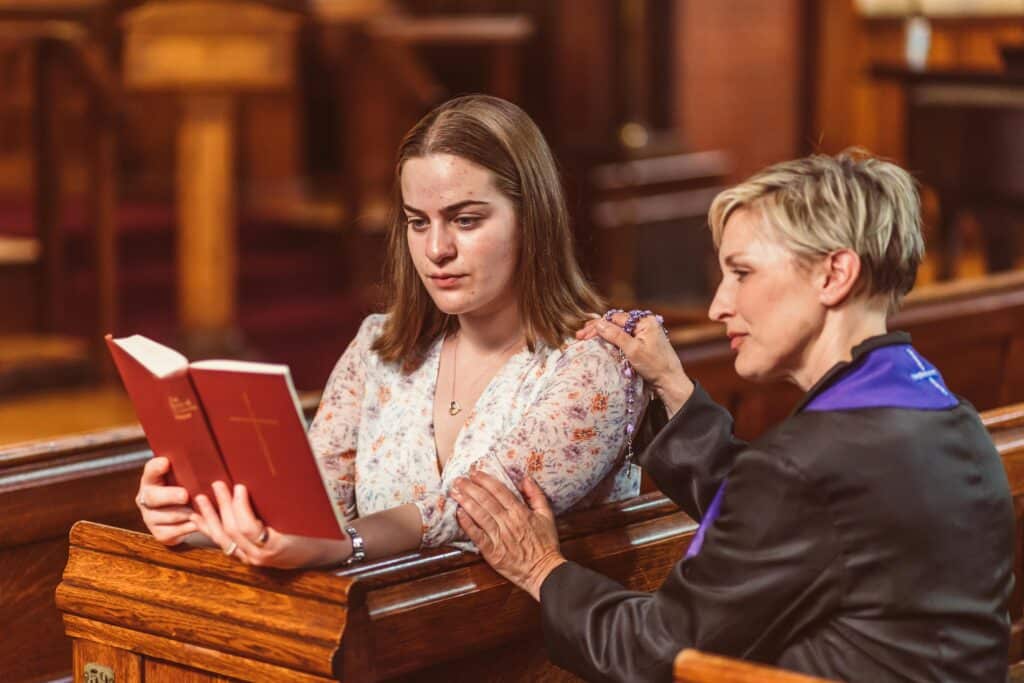
THE PASTOR
The word pastor means “shepherd,” and few metaphors carry more tenderness. But shepherding today is not done in quiet fields. It is done in the storms—amid fractured families, anxious politics, rising isolation, shifting values, economic strain, and the emotional wear-and-tear of modern life.
A pastor is called to care not only for those who attend but for the wider community in which the church is planted. And even the smallest congregation is complex: children finding identity, teenagers navigating pressure, parents fatigued by responsibilities, seniors facing loneliness, and everyone touched in some way by loss or uncertainty.
People come to church looking for a home where their bruises will not be ignored, their questions not dismissed, and their presence not missed. A good sermon can strengthen the mind, but good pastoring steadies the heart. In a world that feels like a whirlwind, people need a sanctuary—a place where confession leads to grace, where the Spirit lifts us into hope, where counsel is wise and the presence of the Lord makes us steady.
A pastor is the one who walks with us, not just the one who speaks to us.
THE LEADER
In many church circles, there’s an unspoken assumption: find a strong preacher and growth will follow. But that claim is only sometimes true, and it is often misleading. In the long arc of congregational life, it seems to me that leadership more than preaching, determines whether a church thrives or merely survives.
Leadership is the ability to see the church as a whole organism—its gifts, wounds, history, opportunities, and calling—and to guide it forward with clarity and courage. Preaching can inspire, and pastoring can sustain, but leadership shapes the future.
Driving through rural Ontario, I regularly pass two churches: one from my own Pentecostal denomination, the other a quiet Presbyterian congregation alongside a cornfield. To my surprise, the Presbyterian church is the one that has grown. The difference? Not doctrine, not style, but leadership. One congregation has it; the other does not.
Church leadership is complex. People come and go, generations rise and fall, cultures shift, and the needs of families change. A leader must be spiritually wise, organizationally skilled, and attentive to the forces shaping the community.
Consider what many congregations expect one person to carry: strategic planning, pastoral care, preaching, staff management, conflict resolution, public communication, community presence, and building oversight. It is the corporate equivalent of asking one person to be CEO, HR director, CFO, communications officer, and head of customer service—while also delivering an inspiring sermon every Sunday.
The truth is simple: Most pastors are not gifted in all three areas—preaching, pastoring, and leadership—and humility is required on every side to admit that. To deal with this multi-faceted need, most larger churches distribute these roles among staff, often with a lead pastor who does preaching, an executive pastor who does administration, and staff assigned to do youth, counseling and oversee other departments.
The modern church faces an added challenge. Pulpits are emptying as older pastors retire with fewer coming into pastoral ministry. Bible colleges once filled the pipeline, but these colleges themselves are facing a declining enrolment and many seminary students are enrolled in pursuing counseling degrees, focused on making mid-career upgrades. To countersign this trend, often churches work strategically to locate those gifted and able, giving them responsibility, testing their competence and passion, providing mentorship with an eye to see them move into vocational pastoral ministry. As pastors see this as part of their calling, it will stimulate the congregational community to be on the lookout, and to be intentional in raising up new candidates. The Apostle Paul did it with Timothy an important member of the leadership team in the early church.
While we will want to know as much as we can about the candidate, here’s a question to ask about ourselves: Will we as a congregation, allow them to serve within their strengths rather than demand that they excel at everything?
The health of the church depends not on one superhero pastor but on a congregation using its gifts together, freeing its shepherd to function with joy rather than exhaustion.
As our church enters this transition, clarity is everything—clarity about what we expect, what we can sustain, what gifts we most urgently need, and how we will support the one we call. The search for a pastor is not about filling a pulpit. It is about discerning which combination of preacher, pastor, and leader will guide our congregation into its next season.
A sermon can nourish. Pastoral care can heal. Leadership can transform. But only together can they shape a congregation that lives faithfully in a fractured world.
Brian Stiller
Global Ambassador, World Evangelical Alliance
January 2026



Stay Connected