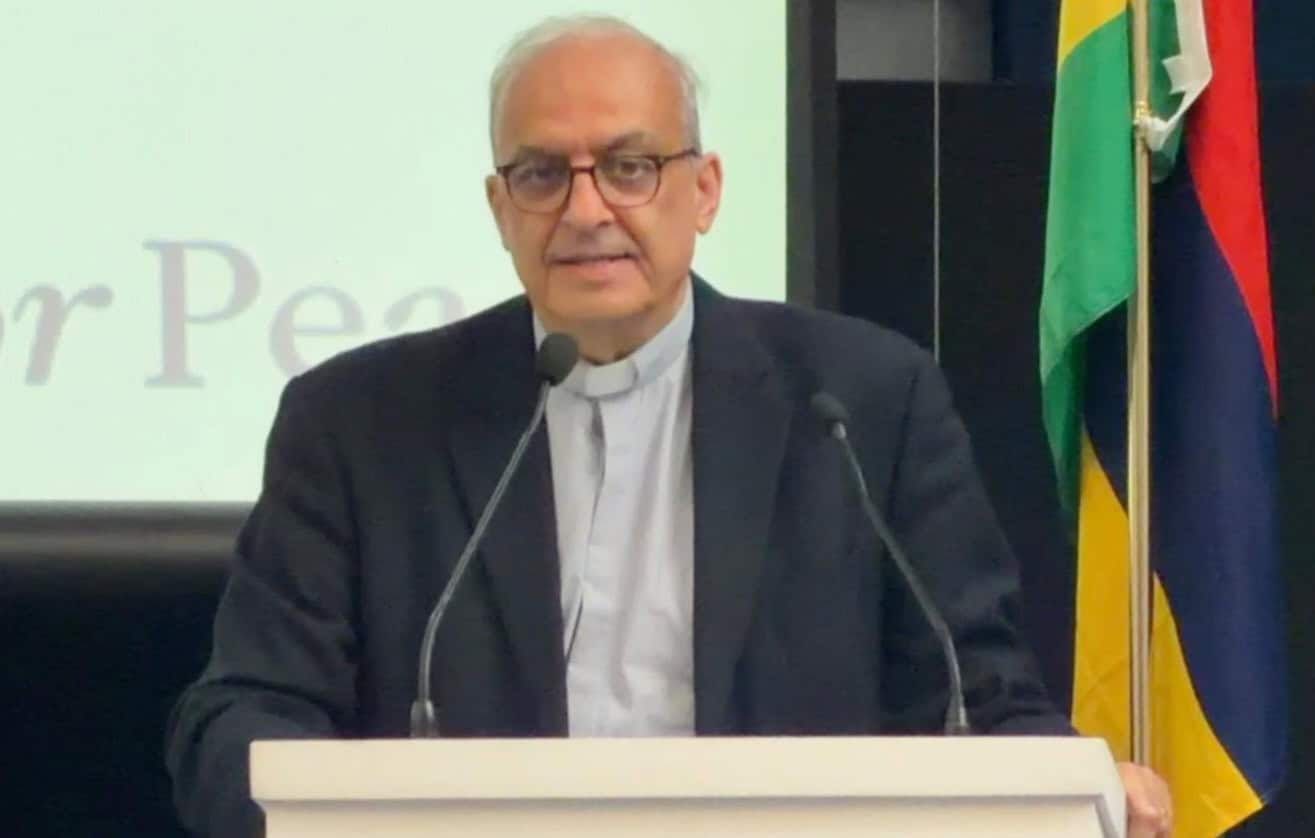
Mauritius — June 23–25, 2026 — At the Religions for Peace 2026 International Council Meeting, the Secretary General of the World Evangelical Alliance (WEA) urged faith communities to treat peacebuilding and human dignity not as optional moral ideals, but as a direct response to God’s call and the example of Christ.
Speaking to religious leaders and distinguished guests, Rev. Botrus Mansour framed the gathering around shared ethical responsibility amid a world struggling with polarization, conflict, and the erosion of trust between peoples and nations.
Opening with a biblical question from the story of Cain in the earliest chapters of Scripture, he asked: “Am I my brother’s keeper?” and answered plainly: “Yes.”
“We are responsible for one another. We are not called to be indifferent to the suffering of others or to the future of the societies in which we live.”
Mansour emphasized that the Bible’s core revelation is that human beings are not meant to be indifferent to suffering or unconcerned about the future of the societies they inhabit. From there, he connected moral responsibility to the New Testament, highlighting Christ’s Parable of the Good Samaritan. In the parable, the compassionate “hero” is someone regarded as one of the “others”—a person pushed outside familiar social boundaries.
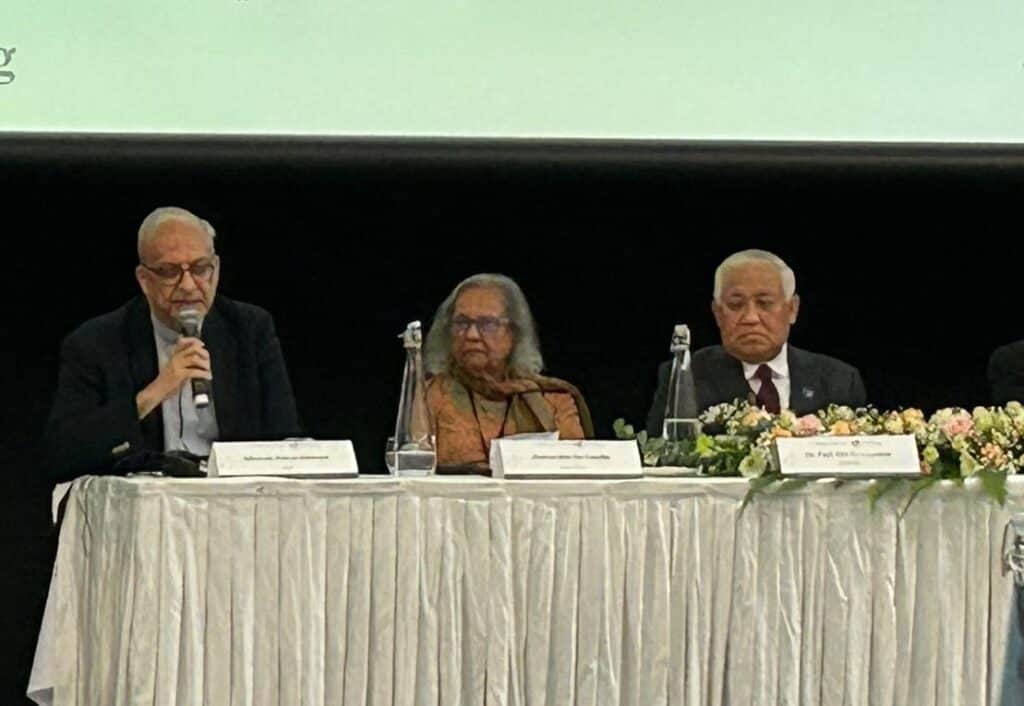
Rev. Mansour stressed that the parable teaches compassion that transcends the divisions people draw between themselves.
While biblical teaching forms one foundation, Rev. Mansour argued that Christian service to others is also grounded in the life and mission of Christ himself. He described the incarnation as God’s entry into a world marked by “pain, divisions, and conflicts,” insisting that Jesus demonstrated what greatness truly looks like.
“Throughout His life, Jesus demonstrated that true greatness lies in service rather than domination, in self-giving rather than the exercise of power,” Rev. Mansour said, adding that Jesus “reached out to the excluded,” and “ultimately, He willingly went to the cross—not to be served, but to serve and to give Himself for others.”
From this, he drew a direct statement of evangelical identity and public responsibility: “For this reason, our pursuit of peace, our service to society, and our commitment to human dignity are not merely moral obligations; they are a response to Christ’s call and a commitment to walk in His footsteps.”
Rev. Mansour also challenged any attempt to separate private belief from public conduct. As he stated, evangelicals emphasize personal faith and personal responsibility before God—yet “genuine faith” cannot remain locked in private spheres.
“Yet we also believe that genuine faith cannot remain confined to the private sphere. It is reflected in the way we relate to our neighbors, our communities, and the world around us.”
He linked that conviction to the Council’s broader aim of strengthening social cohesion and inclusive cooperation amid complex global pressures, where trust in institutions and multilateral solutions is weakening.
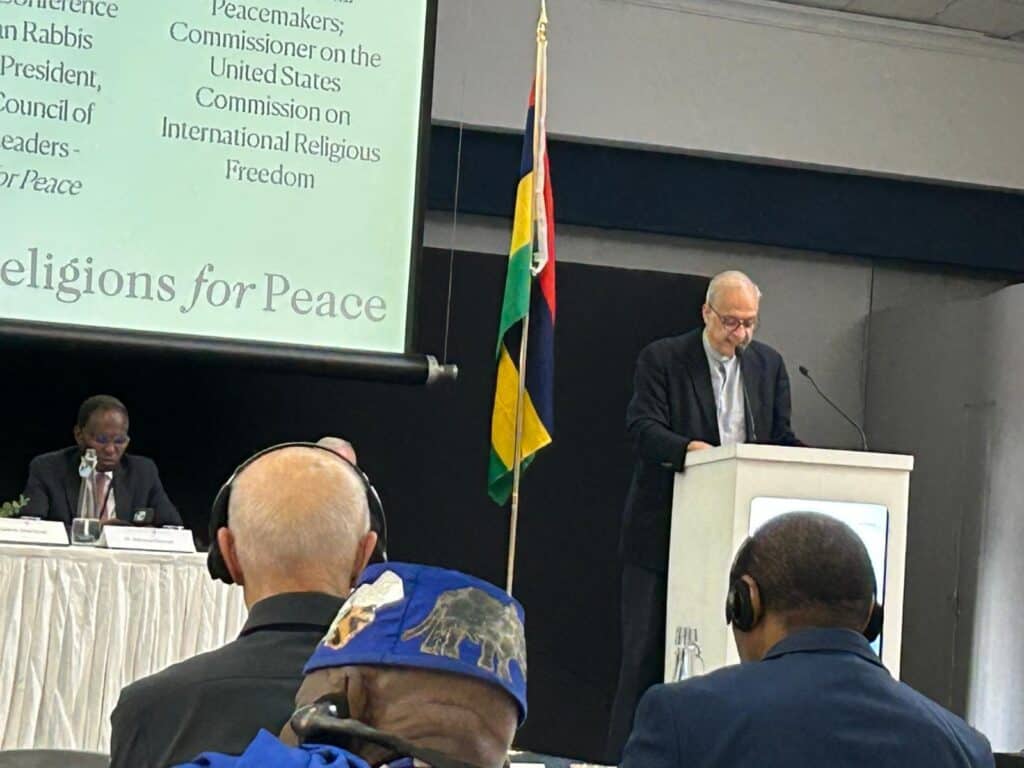
To bring the meeting’s themes into sharp focus, Rev. Mansour drew on a comparison made by Pope Leo between the Tower of Babel and the rebuilding described in Nehemiah. He described Babel as a project driven by self-glorification and the pursuit of power, while Nehemiah represents diverse people working together to build something that serves the entire community.
That contrast led to a question he presented as urgent for the present era: “Do we build only for ourselves, or do we build together for the good of all?”
Rev. Mansour also referenced the biblical command to seek the peace of the city, arguing that societal flourishing is not solely the task of governments but is shared among citizens, believers, and community leaders. He pointed to international bodies and institutions that promote cooperation among nations, protect human dignity, reduce conflict, and build bridges of dialogue and trust between peoples, while acknowledging that such organizations, like all human endeavors, are not without shortcomings.
“They remain important instruments in the service of global peace and the common good,” he said.
At the same time, he stressed that participants are not required to agree on everything. “We are not gathered here because we agree on everything. Nor are we required to do so,” he said, arguing that the future of humanity requires more than mere coexistence. Instead, it calls for genuine cooperation, shared responsibility, and a commitment to serving one another.
In his closing remarks, Rev. Mansour pointed to a challenge facing every religious community: resisting the temptation to view others with superiority or suspicion. He said bridge-building requires humility, courage, and a genuine willingness to encounter and listen to others. “It is easy to remain within our safe circles. Building bridges, however, requires humility, courage, and a genuine willingness to encounter and listen to others.”
To capture the spirit of that call, he quoted Palestinian poet Mahmoud Darwish: “Think of others.”
The Arab Evangelical Secretary General, born in Nazareth, Israel, concluded with a clear invitation to dialogue grounded in conviction rather than compromise. “As Evangelical Christians, we come to this dialogue not by setting aside our convictions, but because of them,” he said, reaffirming that every human being possesses God-given dignity and that lasting peace is built not by power alone, but by trust, justice, love, and mutual service.
“These are the values to which our faith calls us,” he said, adding that despite differences, they enable communities to walk together toward a future marked by greater peace, humanity, and hope.