
This article was contributed by Laura Dijkhuizen. See https://www.nd.nl/geloof/evangelisch/1313952/palestijns-israelische-leider-blikt-terug-op-eerste-half-jaar) for the original Dutch translation.
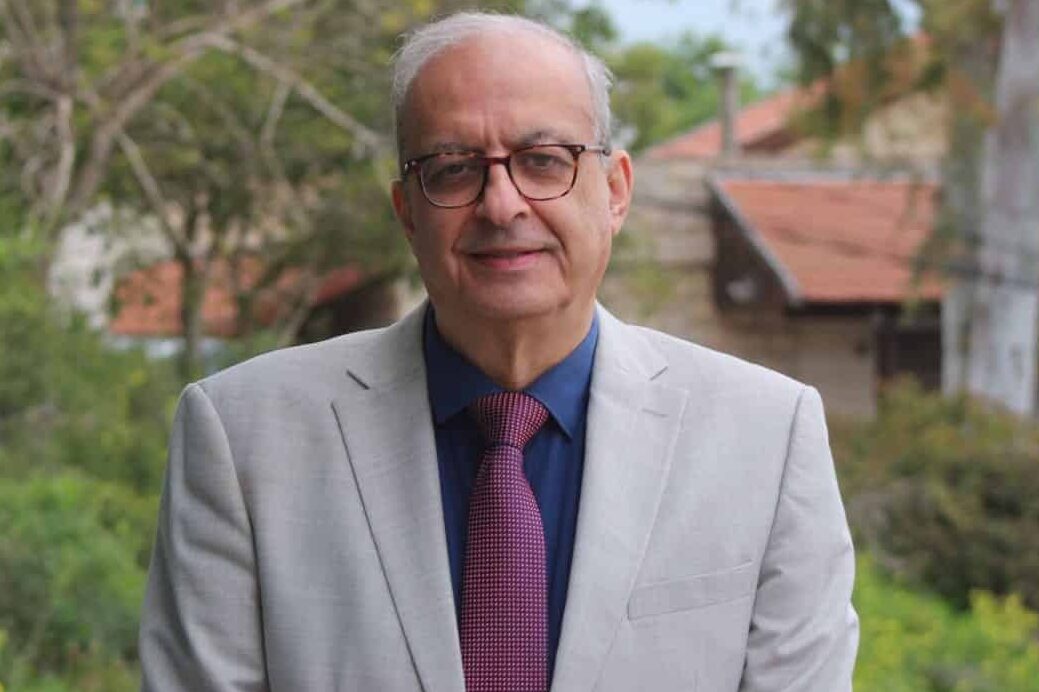
When the war between the United States and Israel and Iran broke out, Botrus Mansour (60) was in Dubai with his wife A’bir. “We wanted to go home, to our children in Nazareth. We knew bombs were falling at home too, but the defense system in Nazareth is better than in Dubai. And so are the bomb shelters.”
Mansour was in Dubai on February 28 to participate in “Impact Day,” an annual gathering of evangelical leaders from the Arab world. He was there in his capacity as general secretary of the World Evangelical Alliance (WEA), the umbrella organization representing over 650 million evangelical Christians worldwide.
He has held this role since October 2025, acting as the organization’s representative. “The face of the evangelicals,” he calls it with some modesty, “though of course I’m not the only one in that role.”
The airspace over Israel and Dubai was closed within a few hours, stranding hundreds of participants for five days. Among them were Arab pastors, alliance leaders, and directors of Christian organizations. “This did give us plenty of time to pray together. We were well taken care of—we received three meals a day, and every now and then a bomb would fall.”
You grew up in Nazareth. Can you tell us a little about that background?
“My father was born in 1934 in this country, which was then still called Palestine and was under British mandate. In 1948, a group of about 150,000 Arabs remained in the area that became Israel. They were granted Israeli citizenship. I come from that group.
My father was a journalist and the first Arab to work for a Jewish newspaper—Haaretz—starting in 1958, for more than thirty years. My mother was a teacher at the Nazareth Baptist School, the school where I grew up, came to faith, and later served as principal for 22 years.’
Mansour is a lawyer and, in addition to serving as a school principal for many years, was also an elder in the church. He is a committed resident of Nazareth; indeed, he was one of the founders of Nazareth Village, an open-air museum on the outskirts of the city that features a replica of Nazareth from the time of Jesus.
With guides in first-century clothing, a working wine press, and fields cultivated just as they were two thousand years ago, this museum has already attracted more than a million visitors. “I was part of the team that set this up. It tells the story of Jesus in the place where he grew up.”
The local involvement expanded nationally. In 2018, he became president of the Convention of Evangelical Churches in Israel, the alliance of evangelical churches in Israel—a small community of about five thousand believers. “I did that for six years, after which I wanted to take it easier because, after all, I was turning sixty and my first grandchild was on the way. But the Lord had other plans.”
You’ve been the WEA’s general secretary for six months now. How’s it going?
“It’s radically different from anything I’ve done before. As a school principal in Nazareth, I knew everything: the people, the culture, the ins and outs. Here, I knew almost nothing. From day one, they asked me all sorts of questions, and I had no idea how to answer them.
So I asked questions in return: what’s the history of this? Or: just send me the job description. I really needed the past six months to figure out exactly what’s going on and who’s who,” he says with a laugh.
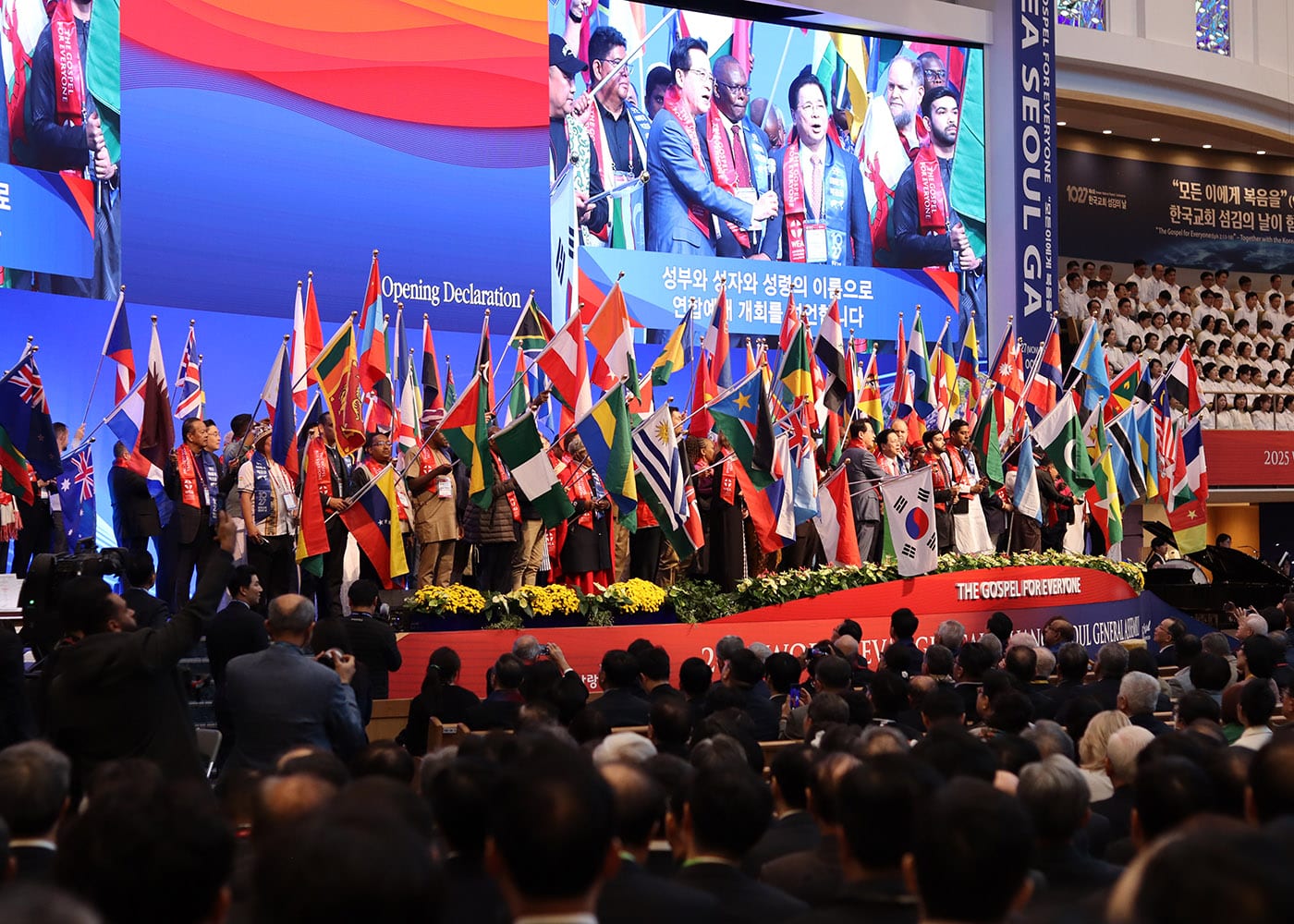
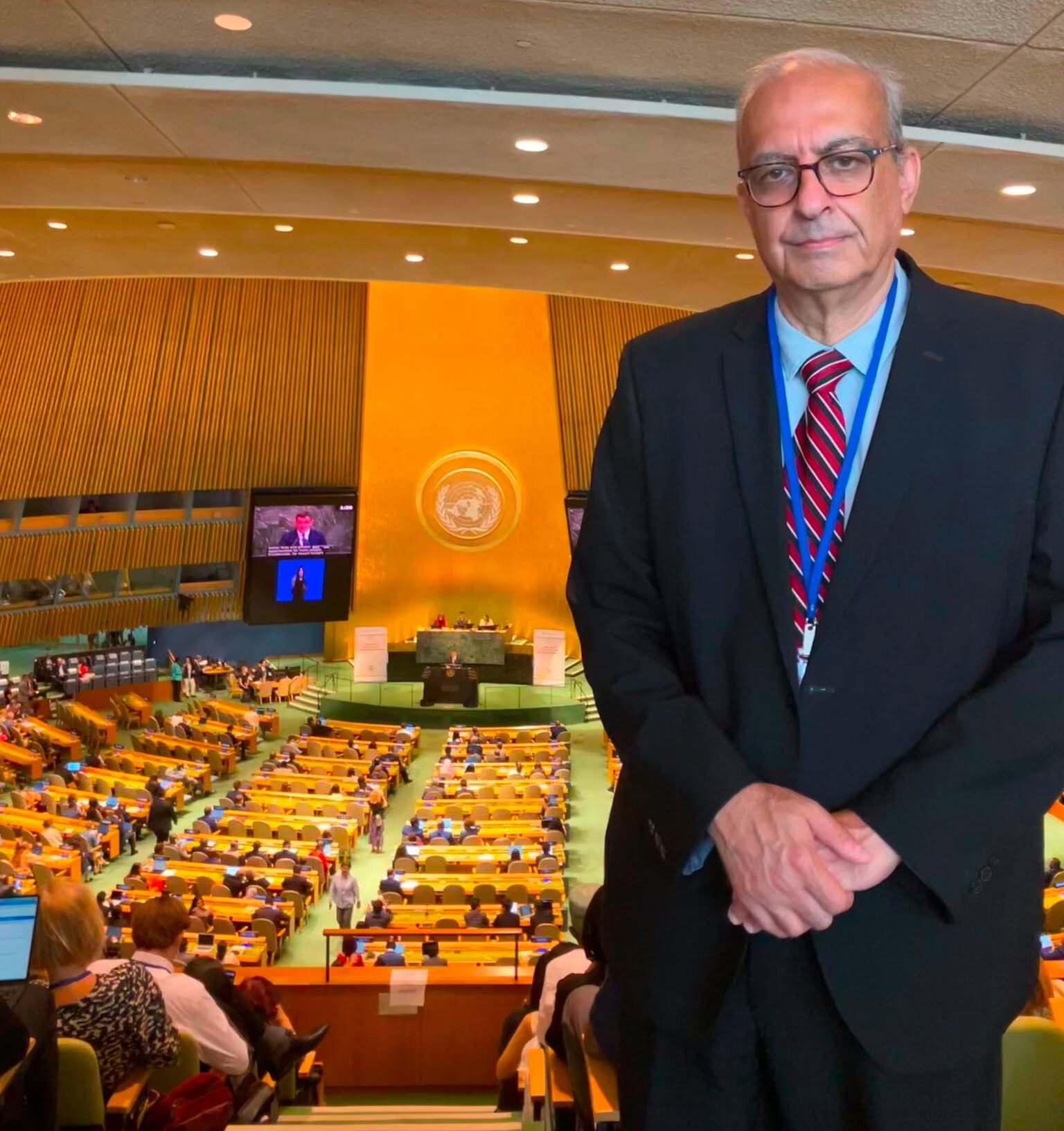
“The WEA has 163 national alliances, nine regions, offices in Geneva and New York, and more than a hundred member organizations. So in the first few months alone, I’ve traveled nine times, including twice to America and twice to Korea.
But my community here in Nazareth has no idea what I do. They only know that I’m away a lot. The only one who understands is my wife, and I share my experiences with her. But it can be a bit lonely at times.”
When the announcement was made, the Nederlands Dagblad reported: “Palestinian from Nazareth becomes new evangelical leader.” That caused quite a stir because people would have preferred you to be introduced as an Arab-Israeli. How do you view that?
“I am both an Arab-Palestinian and an Israeli citizen. Both are true; Arabs live in 22 different countries, and in this region they are called Palestinians. ‘Arab’ is the general term. ‘Palestinians’ refers to the inhabitants of this specific place, this land.”
“On top of that, I’m also a Christian, so a minority within a minority within a minority. But why do people in the Netherlands want to decide for me how I define myself? That’s colonial thinking. This is what I call myself. Feel free to use ‘Palestinian-Israeli’ if that helps. I’m sorry if readers get confused by it, but this is how it is.”
What is on the WEA’s agenda for the coming years?
“The work consists of four pillars: supporting national alliances, advocating for human rights—especially freedom of religion—strengthening the organization itself, and global cooperation. Mansour wants to make that fourth pillar a reality. Not just as a term everyone shouts at a conference and then goes their separate ways. I mean real cooperation.
Through regional alliances like the European or African ones, I want to address local issues. For example, refugee reception in Lebanon, religious freedom in India, or poverty alleviation in countries like Mozambique. We can then connect the local evangelical alliance with specialized organizations.”
You can’t be salt and light if you isolate yourself. If you have no relationship with anyone because you want to guard the pure evangelical doctrine, you’ll get nowhere.
These are our two loaves and five fish. If we are able to bring people together—local alliances with strong international organizations—then the effectiveness doubles.
The regions themselves determine the needs. I am not the pope of the evangelicals. We want to facilitate and have the network and reach to bring people together. That is what the Lord has placed in our hands.”
You present yourself as a bridge-builder. How does that work in practice?
“You cannot be salt and light if you isolate yourself. If you have no relationship with anyone because you want to guard the pure evangelical doctrine, you will get nowhere. In the past, there were regular conversations with Muslims, Jews, and Catholics; I want to restore this.’
For example, immediately after taking office on November 28, 2025, he participated in the commemoration of the 1,700th anniversary of the Nicene Creed in İznik, Turkey, together with the Pope and representatives of virtually all major Christian traditions.
Like the other leaders, Mansour also spoke for a few minutes to the group of high-ranking clergy from all branches of Christianity, including the pope. “That was a sensitive issue, but at the time (during the Council of Nicaea, ed.) it was about the identity of Jesus as fully human and fully divine. That is our foundation. I don’t need to shy away from that.
Still, this connection has proven to be very useful, Mansour explains, because nearly fifty evangelical churches were recently closed in a certain country*. “The pope visited there, and I asked him to raise this issue with the Islamic authorities. Sometimes you need connections to open doors that would otherwise remain closed.”
“Evangelical” has also become a political term. How do you deal with that?
“I believe that everything is political. Even if you don’t take a stand, don’t say anything, or don’t vote, that’s still political. That means you’re supporting the status quo. That means you’re okay with it. My stance is political; the Bible is political too.
As a lawyer, Mansour says that texts must be read in context, and that not every text or law can be interpreted universally. Nuance is essential, and he applies that same approach to his interpretation of the Bible.
There are people who take eschatological passages and conclude from them that certain wars are justified. I prefer to focus on the essence of what Jesus himself said: ‘Blessed are the peacemakers.’ You simply cannot interpret that any other way. You can no longer say, ‘Go wage war.’ It just doesn’t work that way.”
During your ordination, your own pastor from Nazareth laid his hands on you. How important is such a prayer to you?
“It’s a double blessing, because Pastor Azar Ajaj isn’t just my pastor—he’s also been a good friend of mine ever since we were classmates at the Baptist School.
But if I may be honest about intercession: I’m a little tired of being a prayer request—like, ‘Poor Botrus in that war zone, pray for him.’ I want to pray for others. I want to be a blessing.
And at the same time, there are tens of thousands of issues within the WEA that demand attention: a committee causing friction, a statement that angers people, a country calling for attention.
The danger is that you let yourself get swept up in this and forget what it’s all about: the work of the gospel together with the regions and alliances worldwide. That requires wisdom. That’s why I appreciate that there’s a small group that prays for me every week. When I’m not traveling, I join in.
I feel the hand of the Lord. I don’t use this kind of language lightly. People who know me know that I’m down-to-earth, maybe even a bit dry. But I really feel it. And God has a sense of humor: a Palestinian-Israeli lawyer as the face of 650 million evangelicals. That’s how He works.”
* For security reasons, the name of this country is not being disclosed.


Stay Connected