During a 2018 work trip to Nigeria focused on religious freedom, a driver I had never met before asked me about my children. I told him I had none. I had just completed my doctorate and was beginning a new role.
My new friend could not understand why I did not yet have a baby, even though I was in my mid-thirties. He spoke warmly about the beauty of children and described them as “the fruit of the womb,” another translation of Psalm 127:3.
The conversation felt invasive. We were strangers, and yet he was genuinely concerned. To me, the language of the “fruit of one’s womb” initially felt foreign and traditional. I had just finished a PhD in theology and was eager to begin ministry. I did not appreciate feeling judged for not having children. Having a child or not felt like a private decision, not up for discussion. Neither was the idea that, as a woman, my value seemed related primarily to my reproductive capacity.
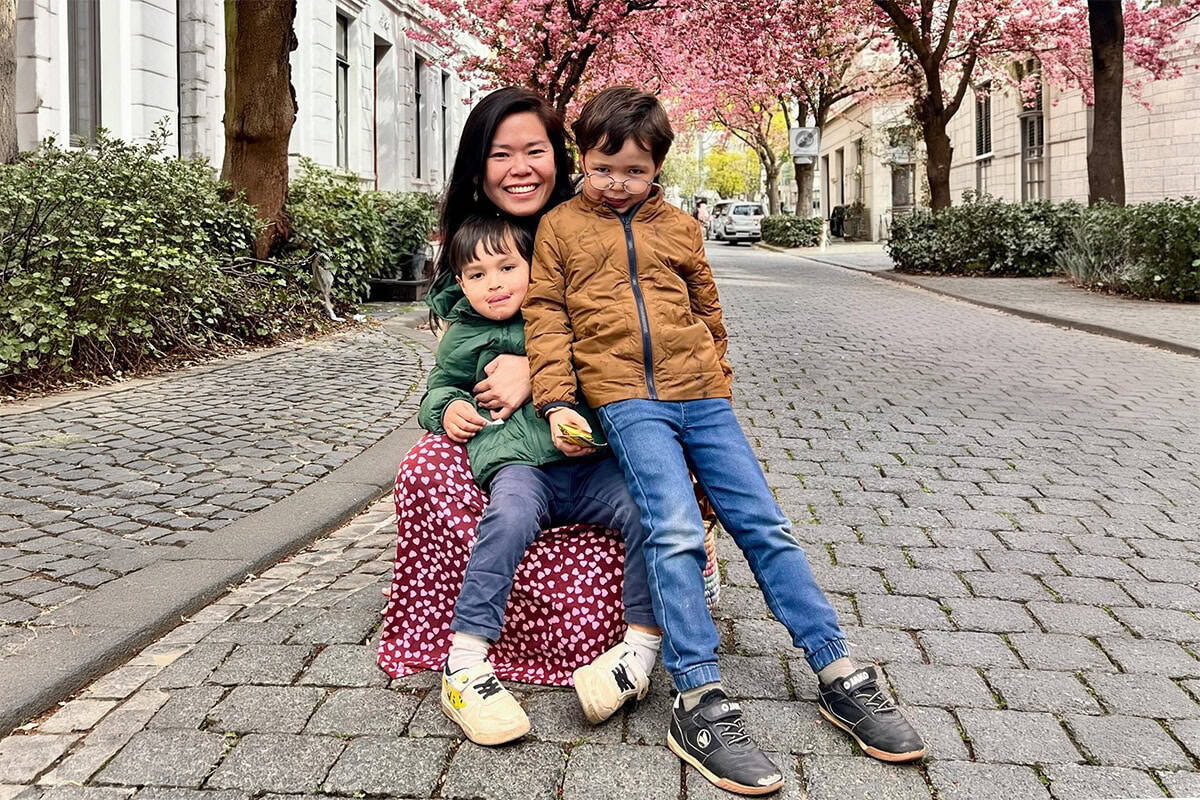
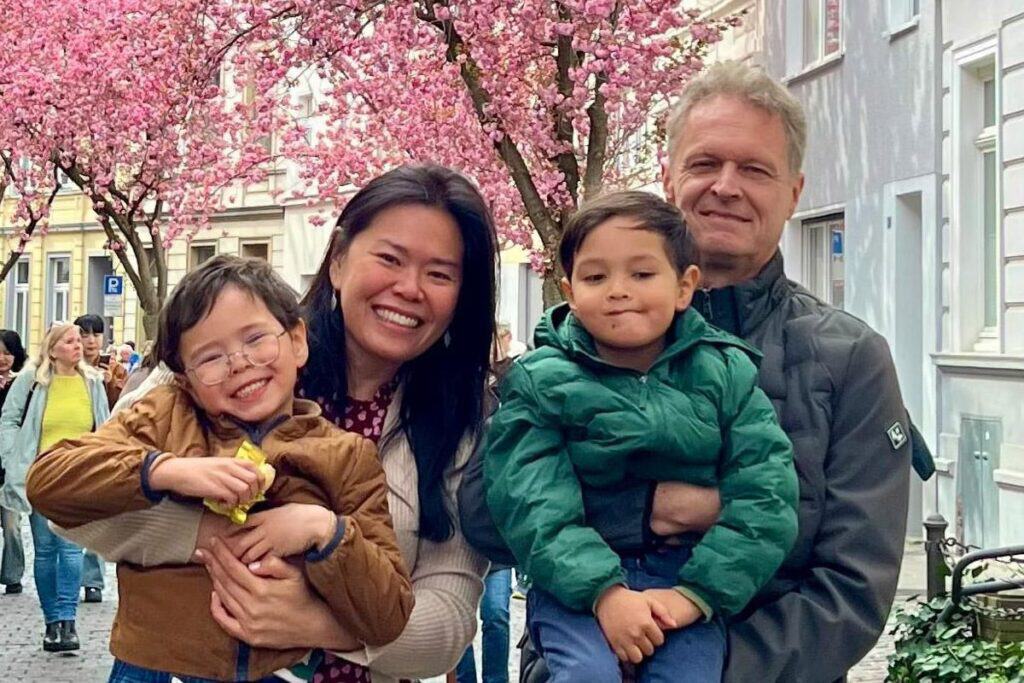
Today, with two children, Hans Xi (6) and Micha (4), my thoughts have expanded. I am grateful to be a mother and have children who call me mama. In sharing my thoughts, I am clear that these are deeply enabled by my husband, Dirk, the father of my children, who loves us all and makes my service to the Lord possible.
Motherhood is another opportunity to participate in God’s mission for this world, to a deeper understanding of love that can only come from God. It cannot be reduced to its mere utility. This can be the perception in a context of falling birth rates, and in societies where motherhood is often treated either as a necessary inconvenience or as an economic function: we need enough babies to sustain the workforce, the economy, and society itself.
The fruit, reward, and heritage of Children
A “fruit” is more than an idea or abstraction; it is embodied life. A mother’s love is not merely a feeling or a sentiment. It is a whole-body offering shaped by love. During pregnancy, I sometimes wondered whether I was simply an incubator, and even imagined that perhaps an actual incubator might be safer for the growing child. Yet I came to realize that the human body is more astonishing than any machine. A mother’s body protects and nourishes the child, often at its own expense.
Motherhood stretched my understanding of love. Love is not simply emotion, thought, or even intention. My imagination and will alone were insufficient for conception to occur, for an embryo to grow, for birth to happen, or for milk to flow at the sound of a baby’s cry. The birth of a baby is a miracle – yet we wish for it to be less painful! The body itself very much participates in love. This has given me a deeper understanding of the necessity of Jesus’ life and death in his love for this world.
Children are also described as a “reward,” not only in the sense of an achievement earned, but in and of themselves. A mother is understood in relation to her children, whether physical or spiritual. This relationship is marked by compassion, nurture, endurance, and faithfulness, echoing the maternal imagery found in passages such as Isaiah 66:13 and Isaiah 49:15. This reward is relational, reflecting God’s relationship with us.
And finally, children are called a “heritage.” Motherhood has reshaped how I think about legacy and witness. Recently, I read an unhinged AI-generated biography of myself. While highly entertaining, what struck me was what was absent. The people who made me who I am: belonging to a family, being formed in Asia, now living in Germany, the values I was taught, and what was important to me.
A mission for families
As a mother, the future no longer feels abstract. I am invested in it through my children. As AI continues to be taught to be more human, what do I, as a human mother, want to impart to my children so that they will continue to know what it means to be human? What should they know of their roots and their beliefs?
Family becomes not simply a private arrangement, but a living transmission of love, memory, values, and faith. The kind of inheritance we leave behind should shape who we are and what we believe matters most.
As we celebrate Mother’s Day, I remember this stranger who reminded me of the world of relationships. The mission of God that we participate in is done through relationships. The way God related to his creation serves as a model for us, made in His image. Modeling God and his way of relating to us will mark us as deeply human. As a mother, I am grateful to have glimpsed more fully the depth, beauty, and self-giving nature of such love.
Peirong Lin, Chief of Staff of the World Evangelical Alliance.
PhD in Theology and Religious Studies from Evangelische Theologieche Faculteit, Belgium