A Side Event at the Second International Migration Review Forum | May 5, 2026
Co-hosted by the World Evangelical Alliance, Refugee Highway Partnership, World Without Orphans, Asia
Freedom Network, and World Organization for Early Childhood Education
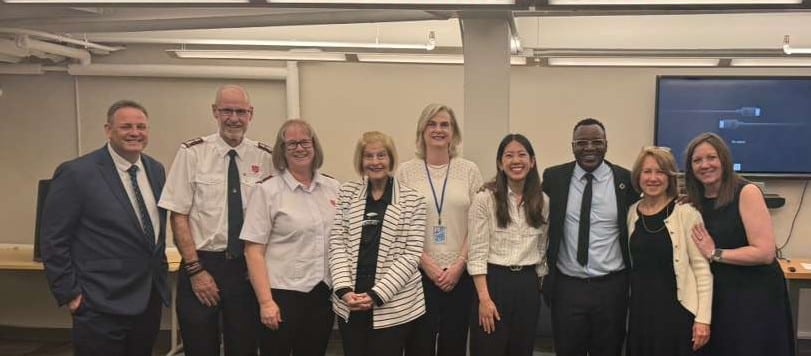
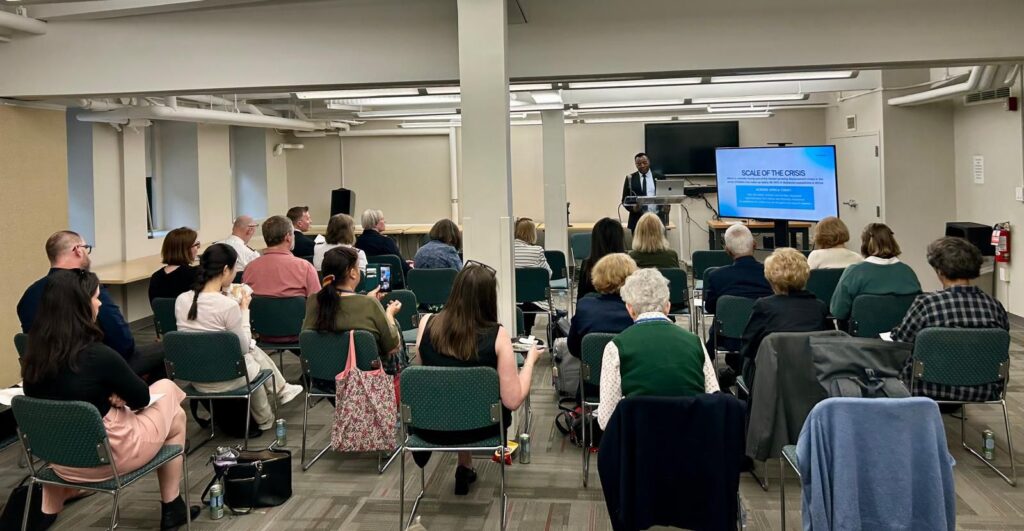
The World Evangelical Alliance (WEA) UN NYC Office, together with the Refugee Highway Partnership, World Without Orphans, the World Organization for Early Childhood Education, and Asia Freedom Network, convened a side event at the Second International Migration Review Forum (IMRF) titled As Local as Possible: Grassroots Faith-Based Responses to Child Trafficking in Migration. Held at the Salvation Army’s International Social Justice Commission, the event brought together 30 diplomats, migration practitioners, and faith-based representatives to examine how community-led organizations are protecting children in migration contexts where formal systems fall short.
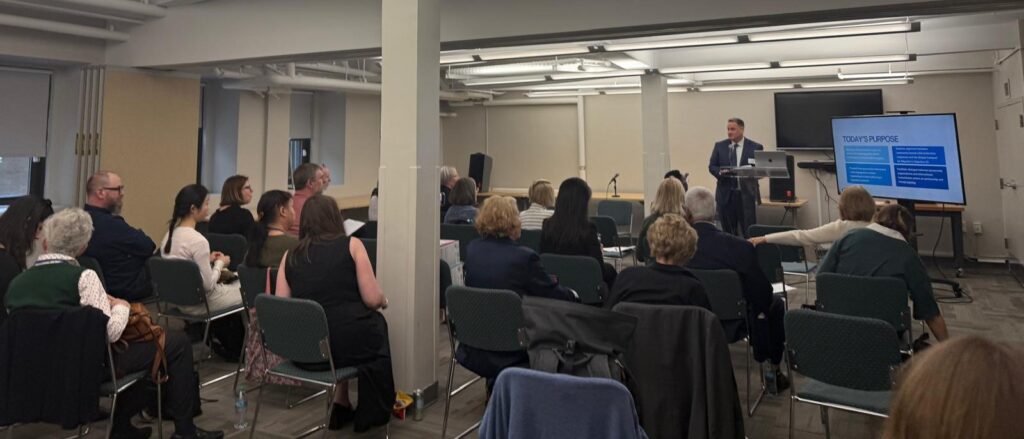
The event was organized by the WEA’s UN New York office, where Dr. Jason Pope, Acting Permanent Representative opened by naming the office’s three priority areas: migration, human trafficking, and freedom of religion and belief. Of these three areas, this side event connected with both migration and human trafficking. “The World Evangelical Alliance is uniquely positioned to answer a growing question among those in the UN space. They are asking why, if we celebrate local action as the key to solving some of the greatest humanitarian problems, do we not see local actors in the highest levels of political advocacy. For this reason, the UN NY office is focused on intentionally creating a pipeline from local communities to the UN stage.”
The event directly addressed Objective 23 of the Global Compact on Migration, which prioritizes strengthening international cooperation and global partnerships, while grounding that policy framework in on-the-ground realities.
Across all three presentations, a consistent picture emerged: children in migration are among those most vulnerable to trafficking, particularly those without birth certificates or legal documentation. Where statelessness and displacement intersect, risks multiply and children are rendered invisible to the very systems designed to protect them.
Dr. Joe Bonga of the Refugee Highway Partnership drew on his grassroots experience working with displaced youth and families across Africa, where children make up nearly 40 to 50 percent of displaced populations. “The children I’ve come across have incredible resilience,” he said. “The question I’ve asked myself is not whether these children can rise, but whether our systems will enable them to rise. This calls for us to move from reaction to prevention, from fragmentation to systems thinking.”
Kamal Raj of the Asia Freedom Network addressed the legal and systemic consequences of conflating trafficking with smuggling, a distinction that determines whether a child is treated as a victim or a secondary participant. In Southeast Asia, the Asia Freedom Network works directly with law enforcement and judicial offices to build victim-centric protocols spanning identification, rescue, rehabilitation, and prosecution, equipping local actors with the tools to respond before exploitation takes hold.
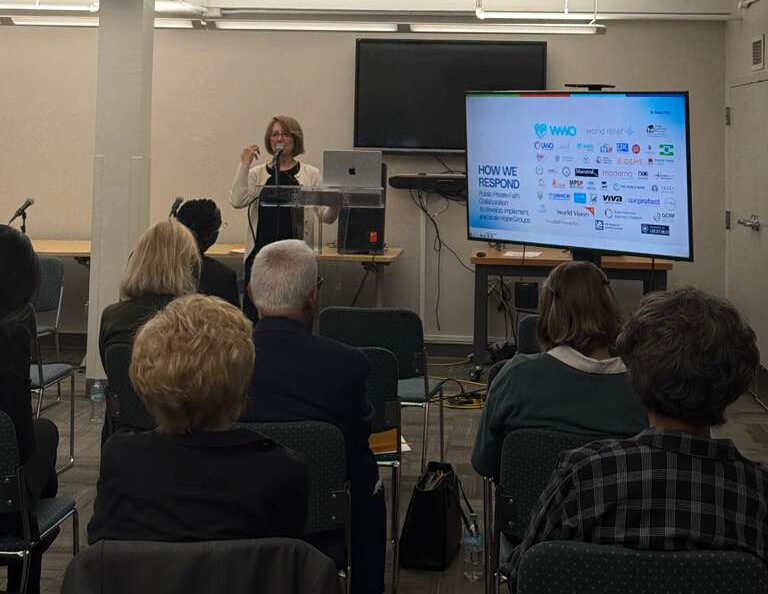
Dr. Susan Hillis of World Without Orphans brought a research evidence base to what the others described, presenting the Hope Groups model from World Without Orphans as a scalable framework for community-based child protection through parenting programs and strengthened family systems. “When we invest in the mental health and well-being of parents,” she noted, “we invest in their children.”
Resources Must Follow the Work
The through line across all three presentations was clear: the most effective responses are local, relational, and already happening. Participants affirmed that conversations of this kind are too rare, and that the gap between grassroots responses and formal international systems remains one of the central challenges in child protection.
Kamal Raj put it directly: “We need partnerships that operationalize Objective 7 of the Global Compact on Migration, which is to reduce vulnerabilities. This means moving funding away from high-level bureaucracy into the hands of grassroots networks who are already protecting hundreds of thousands from exploitation every year.”
As Pastor Brian Newby of Trinity Baptist Church led the panel discussion, it became clear just how essential grassroots, faith-based organizations are often the first point of contact for vulnerable children and families, and among the most trusted. They bring community presence and long-term commitment that complement what formal systems can offer. Strengthening child protection means recognizing that and investing in those relationships.
Looking Ahead
The issues discussed at this event do not stay in one sector. They cross displacement, trafficking, poverty, family separation, and statelessness. The WEA’s UN New York office is committed to ensuring that the organizations doing this work on the ground have a seat at the table where policy is shaped.
For more information or to explore partnership opportunities, please contact the World Evangelical Alliance- For more information or to explore partnership opportunities, please contact the World Evangelical Alliance- www.worldea.org
The event was led by Johanna Chen, Refugee Advocacy Fellow with the WEA, supported by Karen Chong, Partnerships Coordinator with the WEA, and Teanna Sunberg, co-director of Mission New York and volunteer project coordinator for the event.



Stay Connected