
The Secretary General of the World Evangelical Alliance (WEA), has called for unity among evangelical churches worldwide, grounded in collaboration, revival at the local church level, and a steady commitment to peace in a fractured region.
Rev Botrus Mansour, who began his post as secretary general last October, spoke from his experience as an Arab-Palestinian-Israeli evangelical and his choice to stay rooted in Nazareth while helping lead a global movement.
Mansour’s leadership story is inseparable from his life in Nazareth. An Arab-Palestinian-Israeli evangelical, he sits at a crossroads of cultures and loyalties. He described Israel proper as home to about two million Arab Palestinians who are Israeli citizens and spoke frankly about the nuanced identity that comes with dual citizenship and ethnicity.
This background, he suggested, furnishes him with a unique sensitivity for navigating cross-cultural, multi-faith contexts in a world alliance of diverse voices. “I am an Israeli citizen with an Arab Palestinian ethnicity and heritage,” he explained, noting that his life mirrors the broader complexity of Middle Eastern society. He believes this blend—Arab, Palestinian, Israeli, evangelical—strengthens his capacity to bridge divides and to lead a global organization that spans languages, cultures, and political climates.
In his interview with Mark Turman executive director of the Denison Forum, Mansour described the essence of the World Evangelical Alliance as a coalition of independent churches that come together “under one roof—under a network of churches that share common elements.” He stressed that evangelical Christians are diverse across denominations and emphases, yet they unite to pursue shared goals: ministry, mission, relief, and cooperative service.
Mansour reiterated a pragmatic faith: unity is not uniformity, but shared mission and mutual support that multiply impact. In a region enduring ongoing conflict and, in a world, increasingly divided, his emphasis on local revival intertwined with global collaboration offers a model for how faith-led networks can serve as stabilizing and transformative forces. The call to action remains clear: those who wish to participate should contact their national alliance or engage through WEA’s website, joining a movement that seeks to honor Christ by serving “the entire world.
The core impetus, he noted, is spiritual unity modeled on Jesus’ prayer: “The World Evangelical Alliance (WEA) was established about 180 years ago, and Jesus’ prayer on the Mount of Olives ‘Let them be one’ drives our push toward unity.” He emphasized that unity does not require homogenization or centralized governance; rather, it is “love and cooperation across cultures and doctrines” that reflects Christ to a watching world. As he put it, “Be in love with one another, so the world will believe our unity reflects something deep and something that’s very attractive and something that the Lord blesses when we are seen as loving one another in one.”
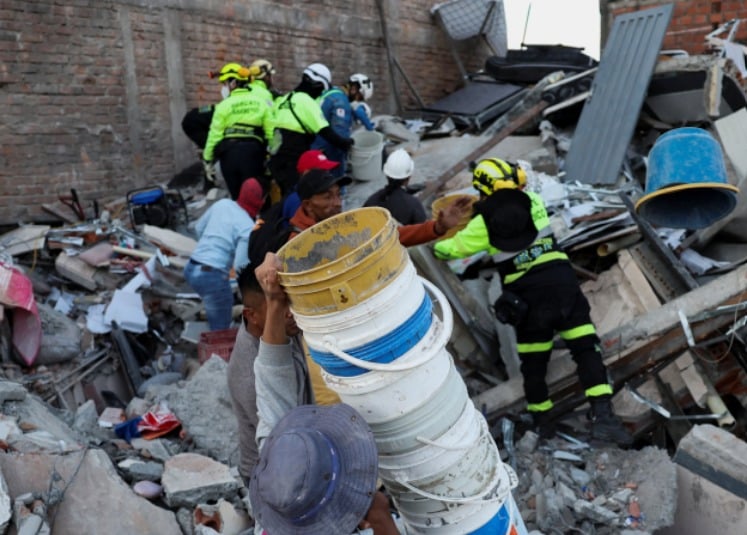
On the ground, WEA’s work is described as twofold: advocacy and alliance-building. The advocacy arm maintains offices in New York and Geneva to bring evangelical concerns, especially religious freedom, before international institutions. Simultaneously, WEA coordinates the work of national alliances and affiliates to implement practical programs in churches and communities, youth ministry, theological education, women’s ministry, relief to disaster zones, justice initiatives, and broader mission endeavors. “These alliances… are not ours. We bring collaboration between them,” Mansour explained, underscoring that WEA’s role is to facilitate, not to dictate.
Speaking about near-term priorities, Mansour stressed the central aim of strengthening collaboration. He described his first months in the role as a learning period, listening to alliances around the world to identify needs and connect them with capable partners. The objective is to catalyze revival by empowering believers at the local church level, “since revival starts with the person in the pew and flows through churches, alliances, regions, and then to the world.” Rather than presenting a fixed top-down agenda, he argued for meeting real, expressed needs—be it evangelism, discipleship, relief, or justice—and providing the right collaborative connections. “If an alliance asks for help in evangelism, discipleship, relief, or justice issues, we bring the appropriate partners to the table and work toward measurable impact for the Kingdom,” he said. The overarching aim is to stimulate genuine, scalable impact rather than to impose a single program. He also emphasized the importance of the term evangelical, arguing that it remains a beautiful descriptor of bearer of good news, despite misunderstandings in some regions.
Beyond his global mandate, Mansour has rooted his ministry in Nazareth, where he helped plant a church and remains actively involved in local ministry. Nazareth, he noted, has a significant Christian presence—“about one-third of its population”—and hosts nine evangelical churches. He described the local church as a beacon of hope amid regional challenges, including war and crime. Choosing to live and serve in Nazareth reflects a commitment to witness from Jesus’ hometown: “I told them no no I’d love to stay in Nazareth. This is my hometown. I lived most of my life there. I have my children there. My grandchild right now also there. And I love to be in that place. I have a calling there.” The broader regional tensions are met with a clear longing for peace: “We want peace. We want to live a good life, prosperous life, a life that where we can share the gospel and be a blessing to our communities.” He hopes that the church can move from being a perpetual prayer request to becoming a contributor to tangible peace and stability.
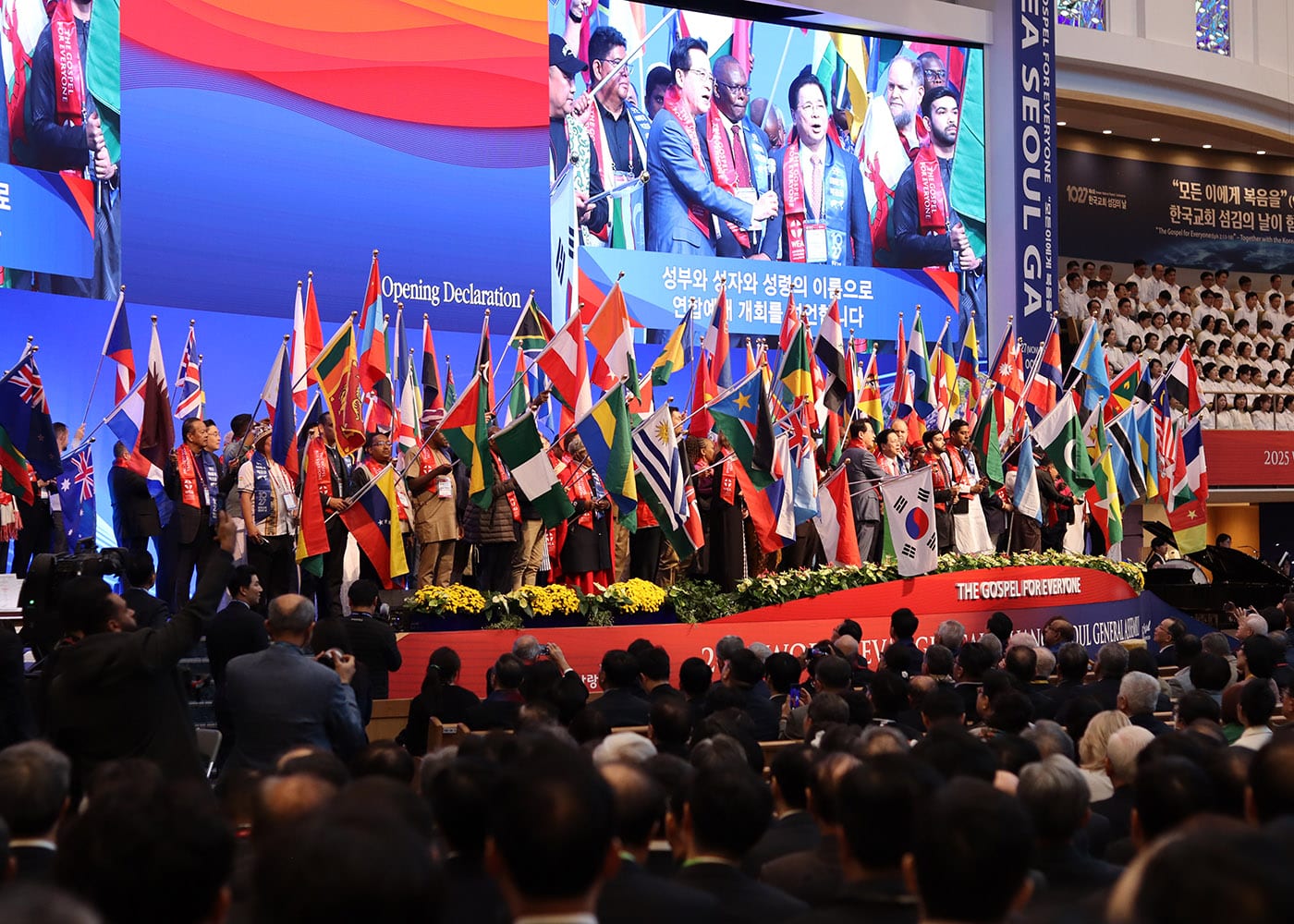
The WEA operates through 163 national alliances, spanning a broad spectrum of evangelical expression—from Baptists and Nazarenes to Pentecostals, Anglicans, Methodists, and more. Mansour highlighted this diversity as a strength, noting that the alliance’s scope includes not only doctrinal alignment but practical collaboration across issues such as evangelism, discipleship, and relief work. The organization acts as a connector and a voice for evangelicals in global forums, including formal engagement with the United Nations and other international bodies.
For those seeking engagement with WEA, Mansour pointed to the organization’s website, worldea.org, where national alliances and affiliated ministries can connect. With a forward-looking horizon, the WEA aims for “revival” and “gospel-centered outcomes by 2033—2,000 years since the church began.” He invited churches and organizations to participate, stressing that “everyone has a place at the table,” and that the King they serve is “the King of the entire world.” He also reminded listeners that WEA’s work is about practical collaboration—matching needs with resources and expertise—so that the gospel can travel to more communities around the globe.


Stay Connected